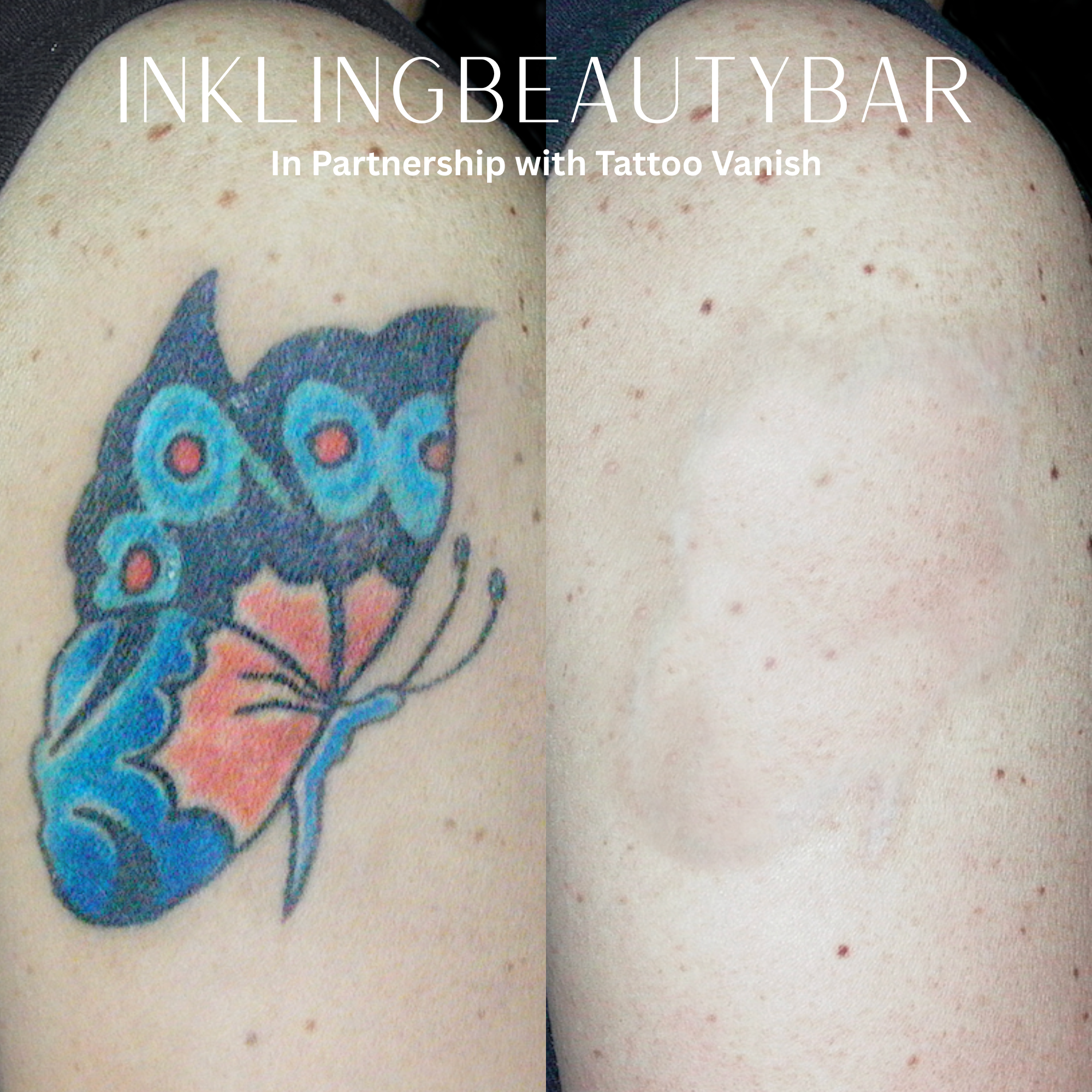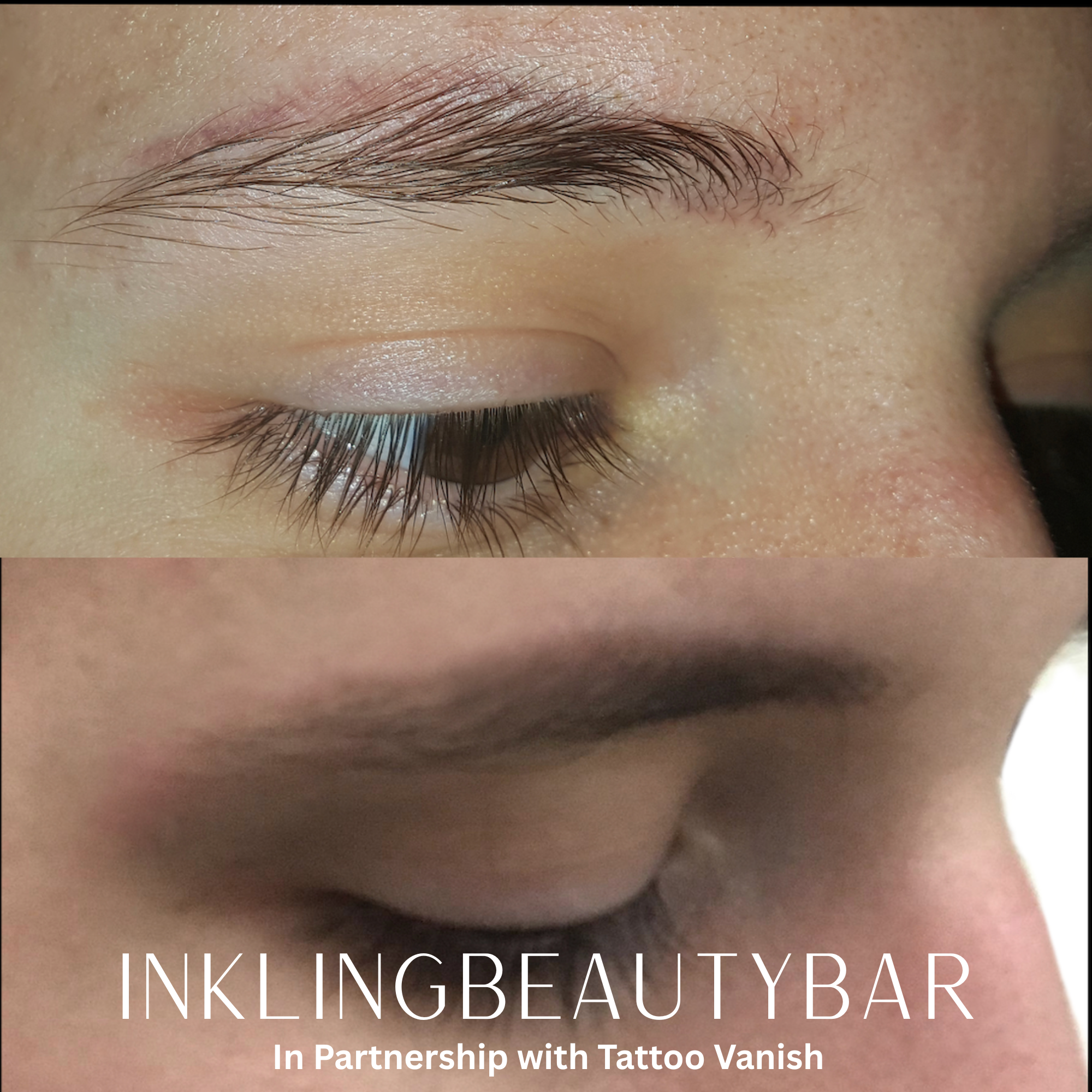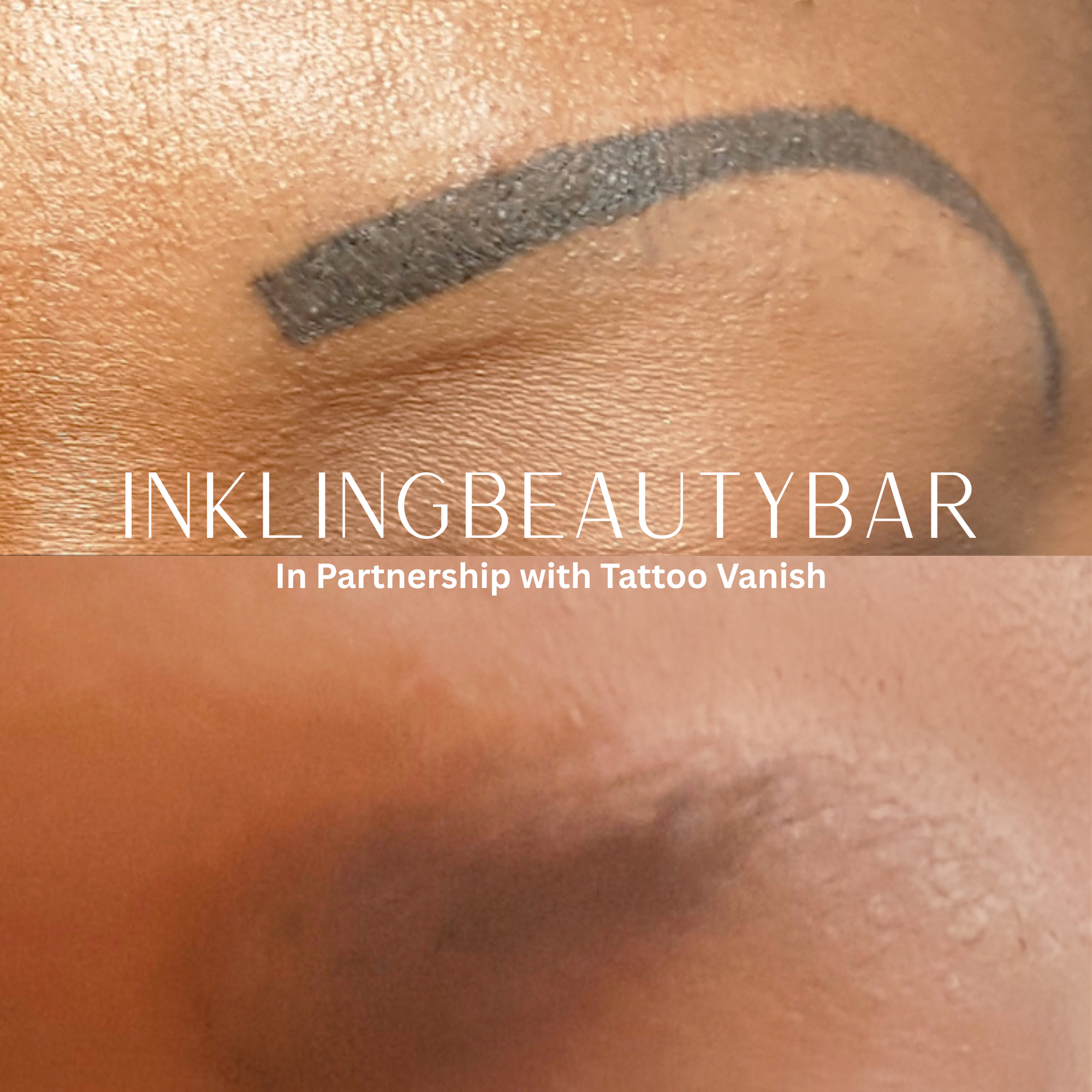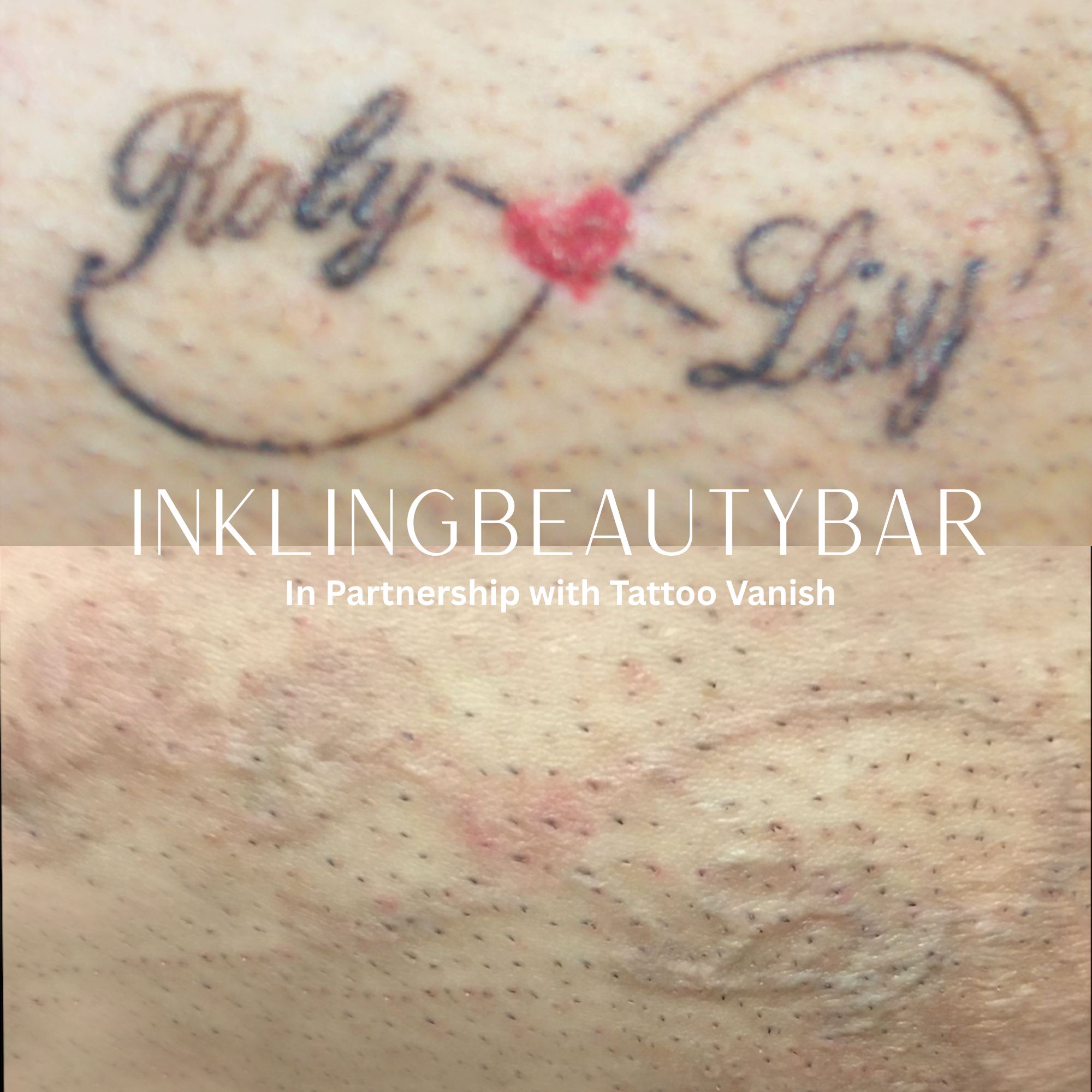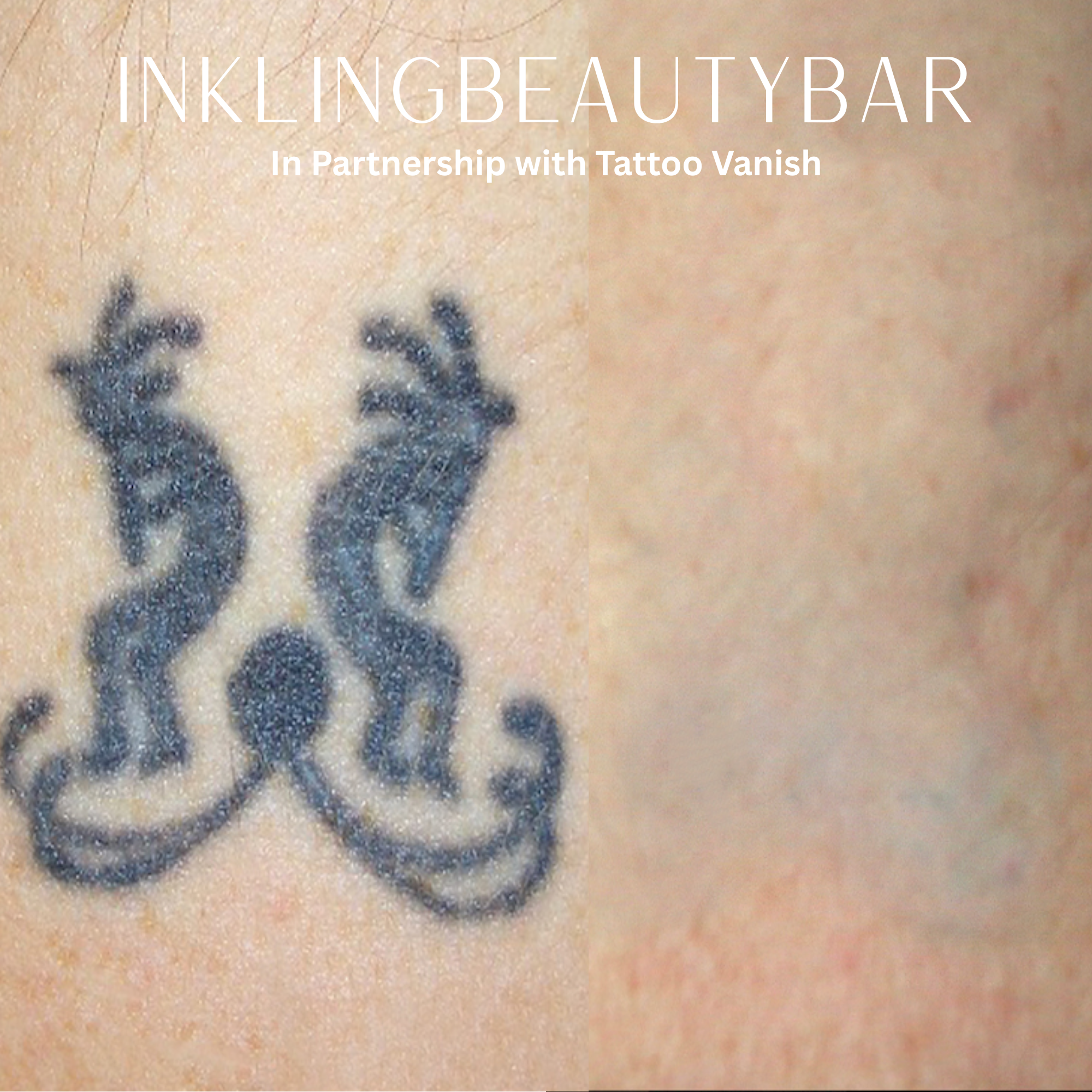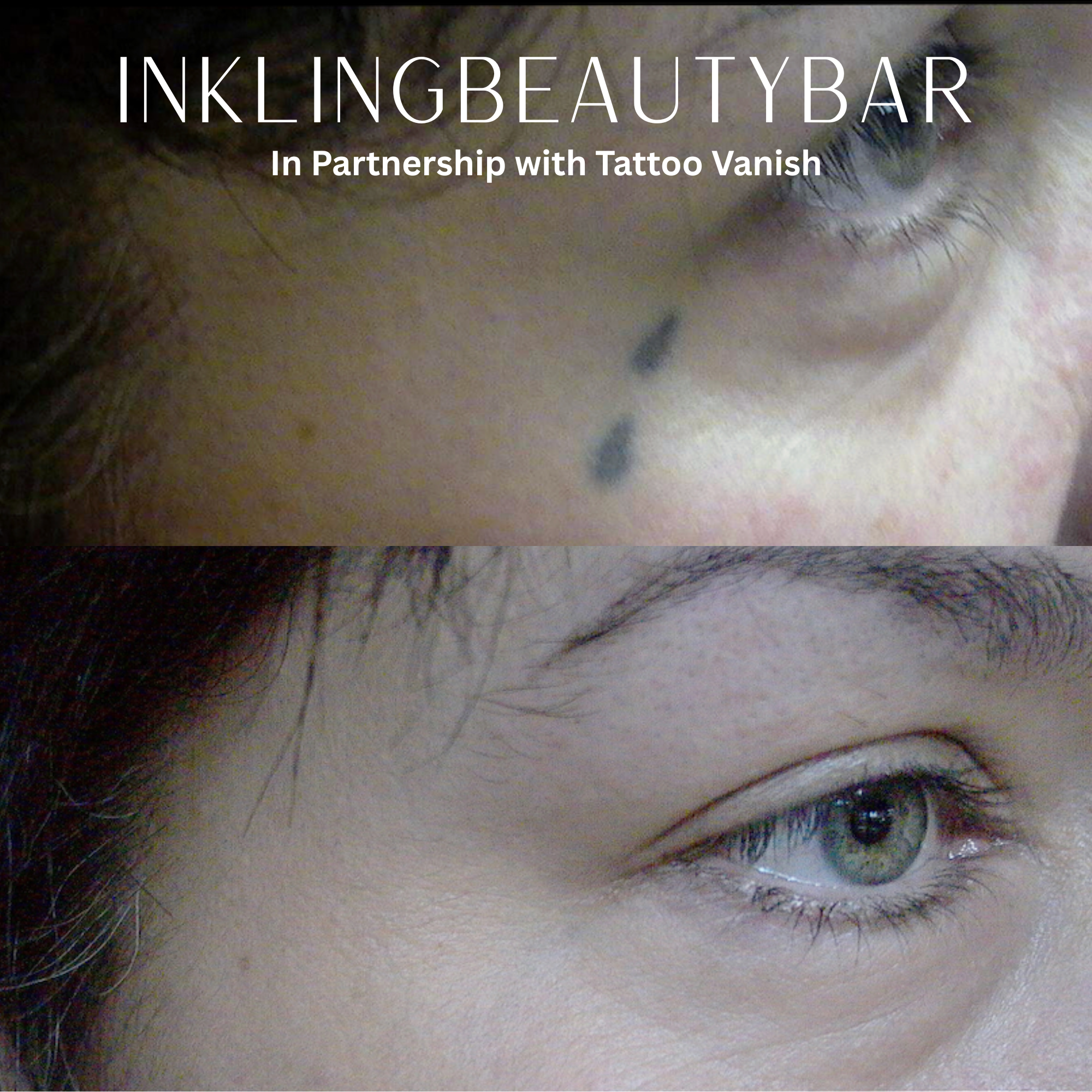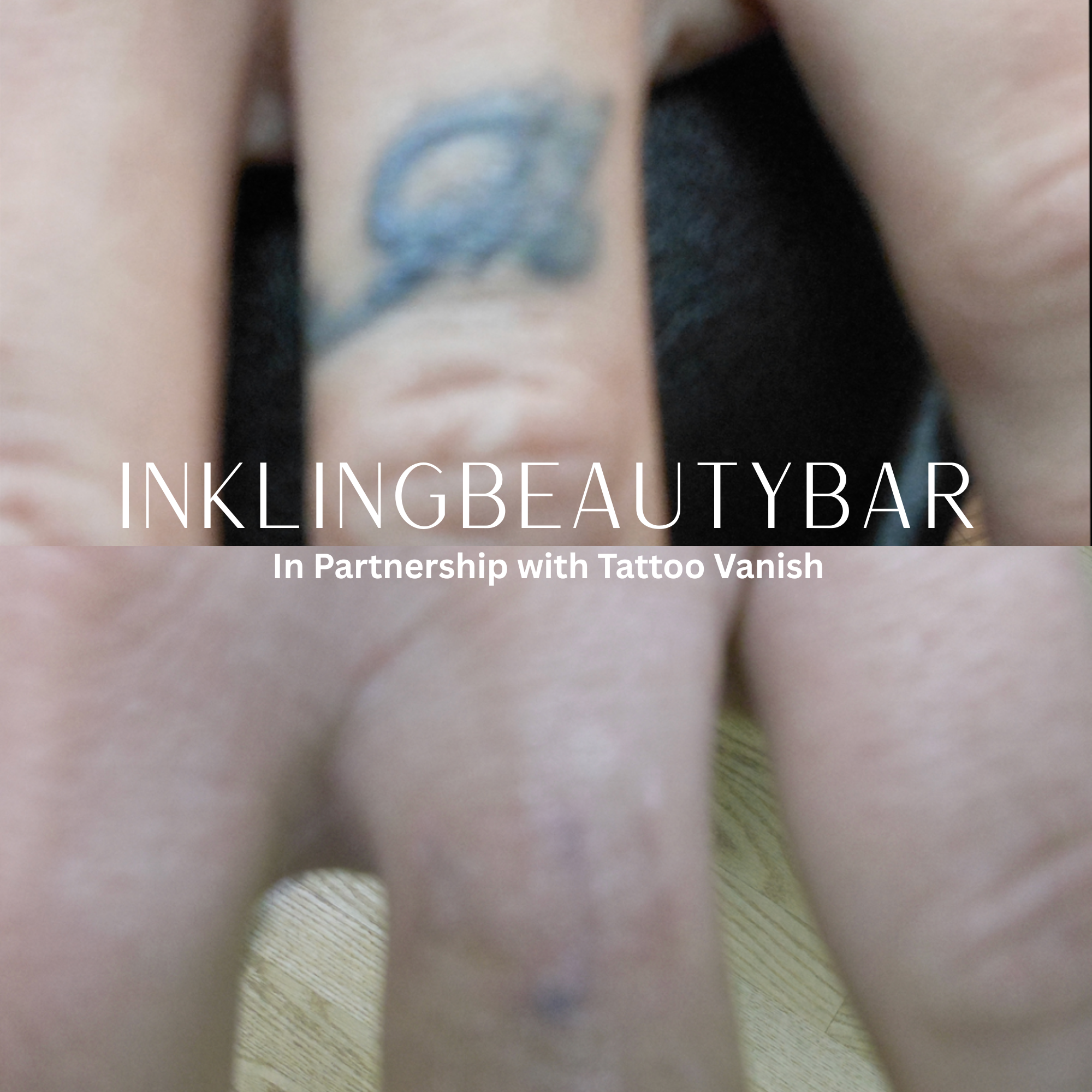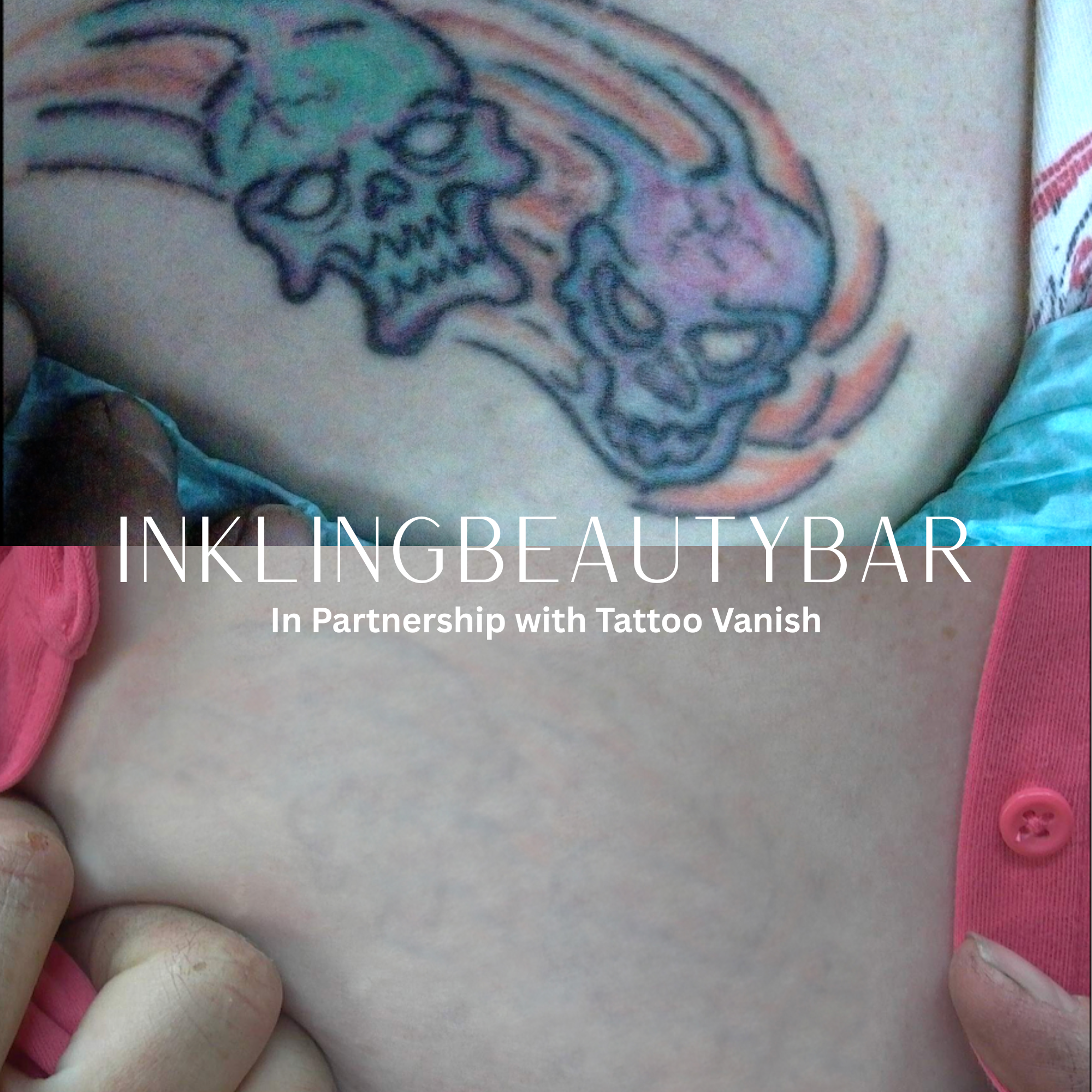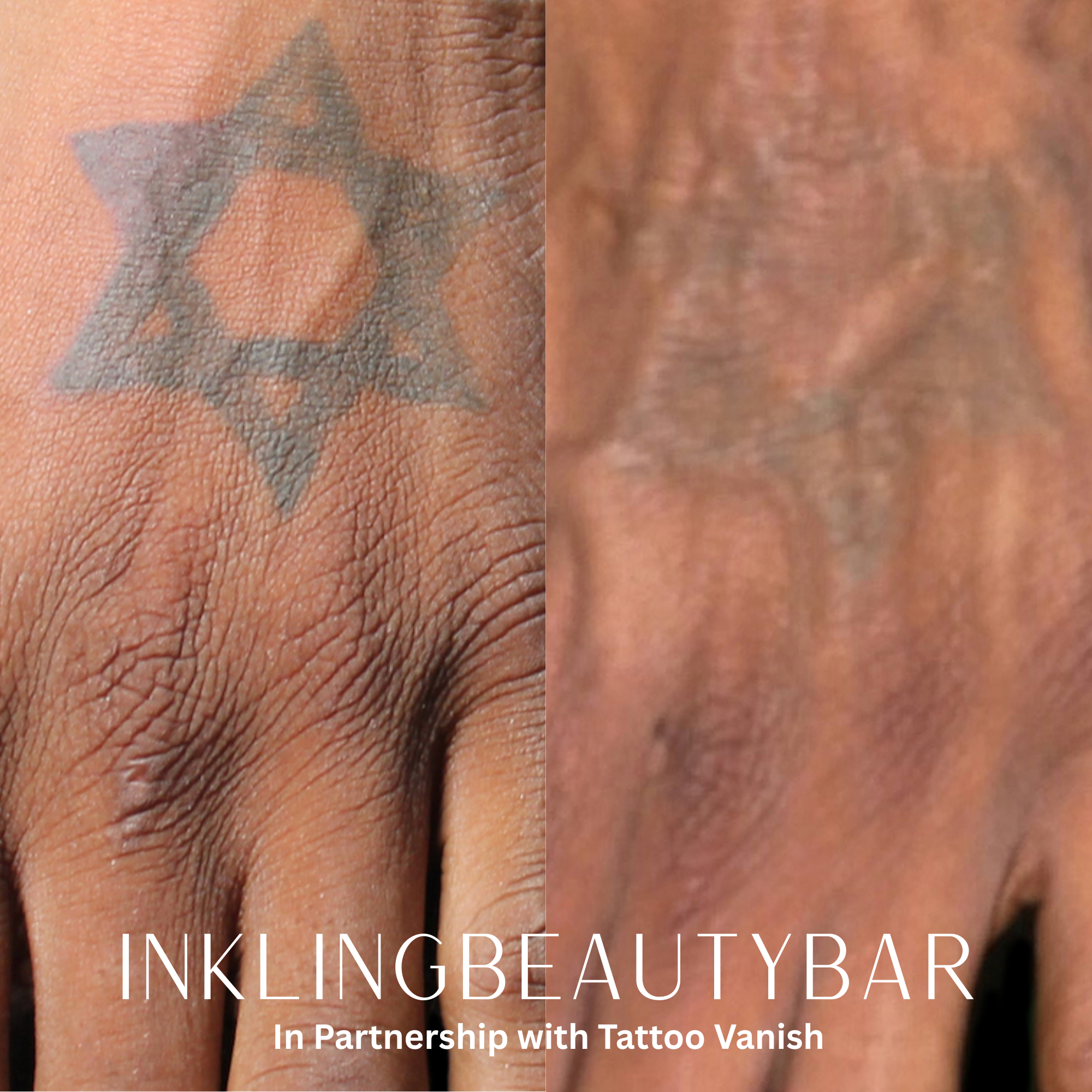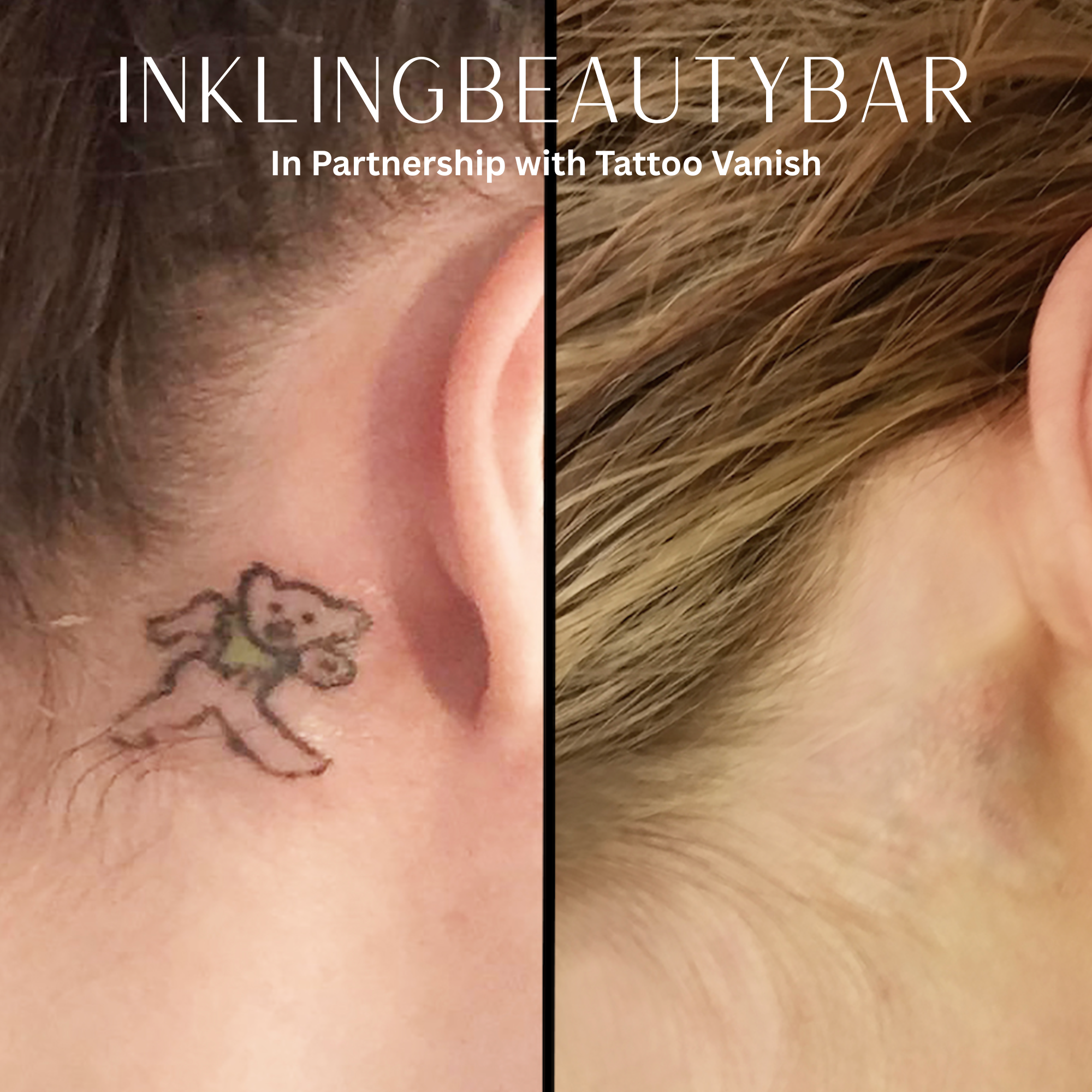
What is Non-Laser Tattoo Removal?
Non-laser tattoo and pigment removal refers to advanced tattoo extraction methods used to gradually lift unwanted permanent makeup (PMU) and body tattoo pigment without relying on high-heat laser technology.
Unlike laser removal, which uses concentrated heat to fragment pigment particles beneath the skin, non-laser methods work by creating a controlled opening within the skin and encouraging pigment to migrate upward and out during the healing process.
At Inkling Beauty Bar, we utilize both the Tattoo Vanish® Method and Pigment Off® Method, allowing treatments to be customized based on pigment type, skin condition, previous procedures, and overall treatment goals.
The Tattoo Vanish® Method is a natural, salt-based extraction system that relies on osmotic action to help lift pigment toward the skin’s surface.
The Pigment Off® Method utilizes an alkaline-based formulation designed to help release implanted pigment from the skin over a series of treatments, making it especially popular for permanent makeup corrections and stubborn residual pigment.
Because every tattoo, pigment formula, and skin type responds differently, multiple sessions are often required for gradual, safe lightening and removal.
How Non-Laser Pigment Removal Works
Targeted Skin Opening: Using a professional tattoo machine, the skin is carefully and superficially opened over the unwanted pigment while prioritizing controlled, conservative treatment depth.
Pigment Extraction Process: Depending on the treatment plan, we utilize either the Tattoo Vanish® salt-based osmotic method or the Pigment Off® alkaline removal system. Both techniques are designed to encourage implanted pigment to gradually migrate upward and out of the skin throughout the healing process.
Natural Healing & Shedding: As the skin heals, a protective scab forms over the treated area. During the natural shedding process, lifted pigment is gradually expelled along with the healing tissue over time.
Why Choose Non-Laser Removal?
Effective on Many Pigment Colors: Non-laser methods are not dependent on light wavelengths like traditional lasers, making them useful for pigments that can be difficult to target with laser treatments, including certain PMU shades and titanium dioxide–containing pigments.
Slightly Less Painful Than Laser: Unlike laser treatments that deliver high-intensity heat pulses into the skin, non-laser removal uses gentle topical anesthetics and controlled surface extraction, making it slightly less painful and highly tolerable for most clients.
Popular for PMU & Corrective Work: Frequently used for eyebrow tattoos, microblading correction, lip blush fading, and cosmetic tattoo adjustments where preserving surrounding hair and minimizing heat exposure are important considerations.
Customized Treatment Approach: Different pigments, skin types, and previous procedures respond differently. Offering both salt-based and alkaline-based methods allows treatments to be tailored to the client’s specific needs and goals.
Gradual, Layered Lightening: Non-laser removal is typically performed over multiple sessions to prioritize controlled fading and skin recovery over aggressive one-time removal.
What to Expect During Recovery
Immediately after treatment, the area may appear red, sensitive, or slightly swollen. A protective scab typically forms within the first few days as the skin begins its natural healing process. This scabbing is essential to the pigment removal process and can persist up to 1-2 weeks.
It is important to avoid prematurely disturbing the scab and to carefully follow all aftercare instructions to support optimal healing. As the skin regenerates, lifted pigment gradually fades over time. Sessions are generally spaced 6 to 8 weeks apart to allow complete skin recovery between treatments.