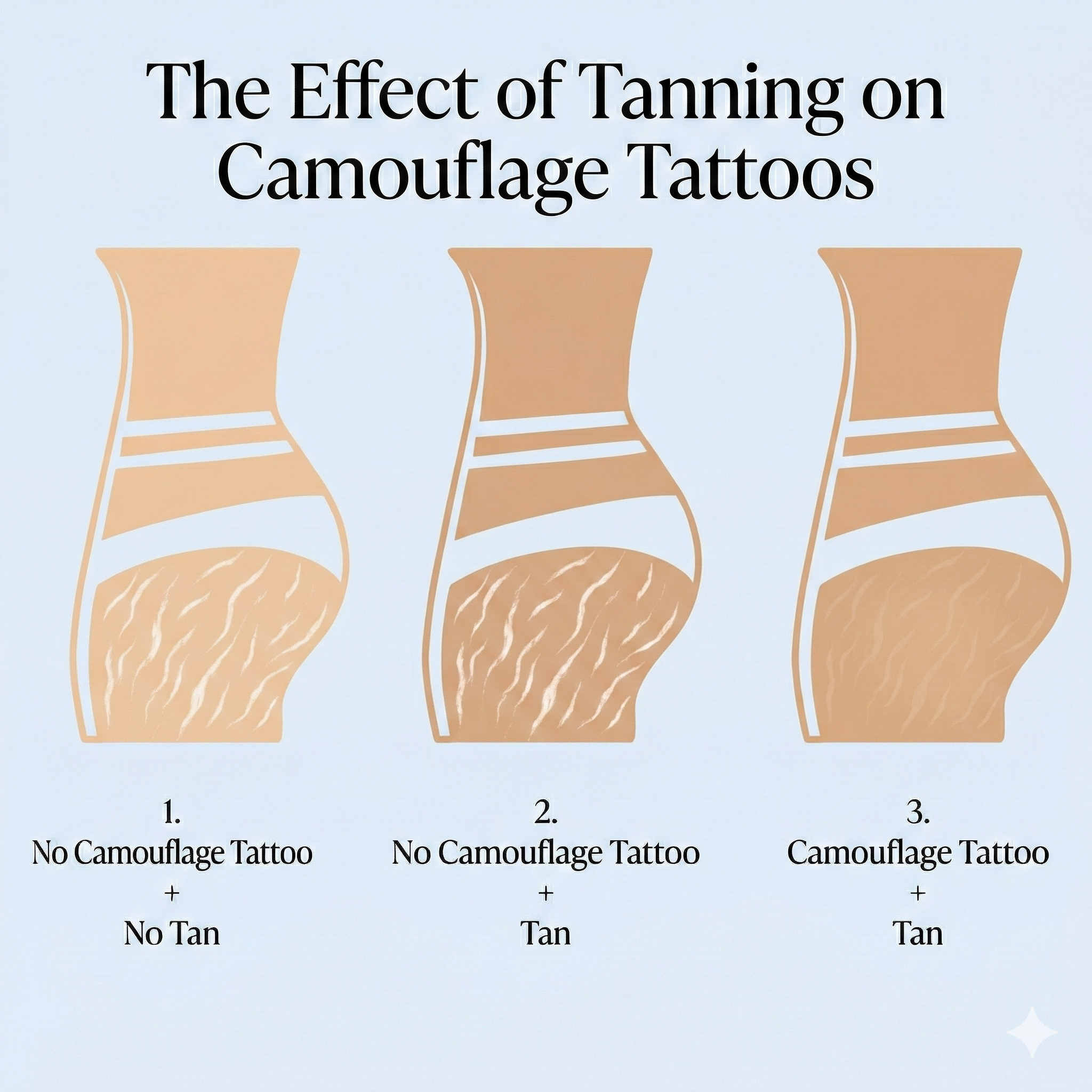
Once paramedical tattooing has fully healed and all sessions are complete, many clients wonder what happens when their skin tans. Because melanin in natural skin changes with sun exposure—but tattoo pigment does not—it’s important to understand how the camouflaged area may look as your skin tone shifts.
Here’s a breakdown of how tanning affects the appearance of paramedical tattooing in light, medium, and dark tans, and how to plan ahead for the best long-term results.
Why Tattooed Skin Doesn’t Tan Like the Rest of Your Skin
Scar camouflage uses specialized pigments that are matched to your skin tone at the time of treatment. However:
- Tattoo ink does not contain melanin
- Scar tissue often has altered melanin response
- The surrounding natural skin darkens or warms when exposed to sun
- The tattooed area generally stays the same color
As a result, the treated area may appear lighter than tanned skin—especially with moderate to deep tans.
How Paramedical Tattooing Looks With Different Levels of Tanning
Light Tan
If your skin darkens only slightly:
-
The tattooed area may still blend well
-
The contrast is usually minimal
-
Most clients don’t notice a clear difference
-
Makeup or bronzing products can help even out tone if needed
Best for: Fair to medium skin tones, low sun exposure, natural gradual tans
Medium/Golden Tan
As your skin warms or deepens in color:
- The tattooed area may begin to appear subtly lighter
- Undertones (golden, peach, olive, or cool) may shift in comparison
- Stretch marks and scars may become more visible due to contrast
Touch-up blending may be desired in the future if tanning becomes part of your lifestyle.
Dark or Deep Tan
With strong tanning—sun, tanning beds, or self-tanner:
- The surrounding skin may darken significantly compared to the tattooed area
- The camouflage area can appear noticeably lighter
- Hypopigmented scars may reappear more visibly under contrast
- Multiple skin tones in the same area can become more defined
In these cases, the tattooed area doesn’t “darken” with your tan, so it may no longer be an exact match.
Self-Tanners vs. Sun Exposure
Self-tanner / DHA-based bronzers
✅ Can temporarily darken camouflage areas
✅ Patch testing is recommended before full application.
⚠️ May require careful application to avoid uneven absorption
⚠️ Self-tanner can sometimes settle differently on scar tissue or textured skin.
Sun exposure & tanning beds
⚠️ Can deepen surrounding skin but not tattoo pigment
⚠️ Increases contrast risk
⚠️ Raises chances of hyperpigmentation or discoloration
⚠️ Because of the intensity of UV exposure, tanning beds can shorten the lifespan of camouflage tattoos (or may even change the appearance of the ink) more than natural sun exposure.
Best Practices for Long-Lasting Results
To keep your camouflage tattoo looking as natural as possible:
- Use sunscreen daily
Apply SPF 30 or higher to treated areas when exposed to the sun. - Avoid tanning during the healing phase
Do not tan—sun, bed, or self-tanner—until the area is fully healed (usually 6–8 weeks). - Be mindful of major tan changes
If you frequently go from very light to very tan, the contrast may be more noticeable. - Consider maintenance sessions
Over time, small touch-ups may help maintain the most natural blend.
Final Thoughts
Paramedical tattooing is designed to blend in with your natural skin tone, but it doesn’t change the way your real skin does when exposed to sunlight. A light tan typically maintains a natural blend (may not even be noticeable), while deeper tans may create more visible contrast.
By understanding how pigment behaves and planning ahead with sunscreen, aftercare, and lifestyle awareness, you can enjoy long-term, natural-looking results.
Have Questions About Tanning and Your Tattoo?
Every skin type, scar, and lifestyle is different. If you’re unsure how tanning might affect your specific case, a consultation can help you plan the best timing and approach for your treatment.
Your results are a partnership between the treatment itself and how the skin is cared for afterward—and a little sun awareness goes a long way.